Universal connections — Objects between analogue and digital

14 lauschangriff

“..what is the difference between analogue and digital, physical and virtual? what connects and bridges these apparently different worlds?”
Dialog05 wished to expolore this question with their exhibit ‘universal connections.’ A question they say each member must address on a daily basis as an industrial designer, cerating consumer products.

The team decided to explore the subculture of the USB — Originally limited to only geeks, nerds and those in the industry, but now, is an every day item, bordering on low-tech, a technology that has been clearly understood and accepted by the general public.

“..something democratic evolves and develops and therefore often even receives a totally different usage than was originally intended.”

“this phenomena inspired us to use the USB interface, with all its possibilities and ambiguities as a medium for this project. we created installations, objects and products that are surprising, enlightening, inspiring and questioning, and on the other hand ironic or even amusing. “


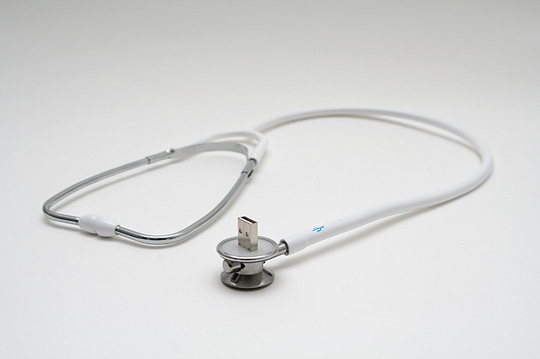
the direct individual-data-connection for hearing, scanning and checking. any more secrets?


what are our essential needs? what do we really need for surviving?


not only for data junkies, also in the event of a virus. or simply for your daily data rations!


communication is spontaneous, direct, and works best between two individuals. is digital a serious alternative?

no access for unauthorized persons.

plastic, steel and glass. where should the data go? an icon regains its physical form


for the non-dialling generation, it’s a trip into the past – for those born earlier, it’s a trip down memory lane.


forgotten your password? the universal handle opens doors and gates.

a snapshot from summer, your favorite gig, your first time or your last flirtation. do you want to click through your memories or bury them?
http://www.dialog05.com/

Birds in your house

winter bird

You may remember an earlier post by Henry on the work of Maria Yasko – when he had a look at the Modular Shelving Unit — 

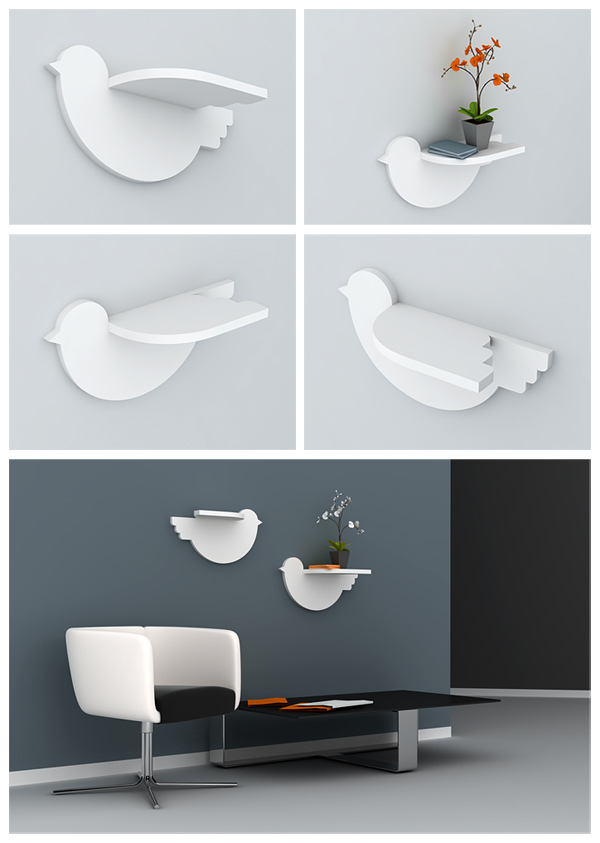
— Beautiful and clever pieces by young, Russian, industrial designer Maria Yasko.  Yasako suggests that her piece, “Snow bird” is a blank/canvas. When placed in the hands of a designer, artist, or any adult or  child for that matter, “Snow bird” acquires a completely new image every single time. You can take a felt tip pen or a box of paints, reimagine it as you wish and transform it’s simple white canvas into a small work of art. It is up to you to decide whether it is going to be a shelf or just a bright spot in your interior design.

winter bird by Maria Yasko

Nature and Nosigner

nosigner0001trim_t346

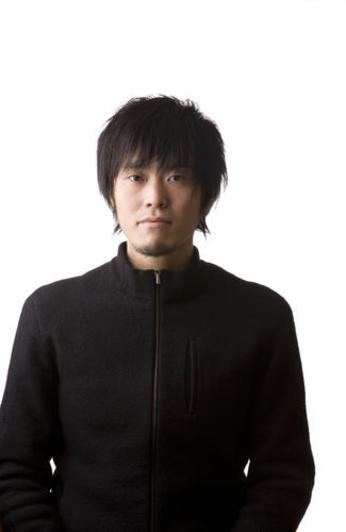
‘Nosigner’


“In an age with tons of artificial things around us, I feel many people desire to have real things that provide them with experiences from nature.” 


Fluoflo, 2008

Originally studying to be an Architect, the Japanese industrial designer who goes by the alias ‘Nosigner‘ clearly found his calling beyond the composition of a building.  Nosigner has been recently featured in all the latest design shows and magazines – getting rave reviews for his forward thinking installations and product designs.  The works created by the designer has a flowing theme, using nature as the inspiration behind his projects.  The use of nature is just part of Nosigner’s overall goal to increase awareness on  global issues relating to the environment and waste.  

The origination of the name ‘Nosigner’ and and in-depth discussion of his projects was featured in an interview for this months issue of Metropolis.  Check out the article here

Spring Rain

Pokkari, 2007

Luminaire composition of feathers. 

Rebirth, 2008

Luminaire composition of hollowed egg shells.

Bonnie So and ‘this is’, Young Australian Designer

s-Mobius in-use

Bonnie So is a Melbourne based recently graduated designer, making her mark in the design world.

I first saw Bonnie’s work on display at this year’s Design Market in Melbourne –

Bonnie is a creative entrepreneur and has already founded her own design brand and name, ‘this is‘ at only 22 and 1 year out of uni!

Check out some of Bonnie’s amazing products and designs and help support this aspiring young designer (all of Bonnie’s products are available to buy) along with an accompanying interview with the designer herself!

Tell us a little about yourself, where are you from and where are you living now?
Born in Hong Kong in 1986. I moved to Australia for education in 2001. During my Bachelor of Design (Industrial Design) in 2006 I spent a year aboard at Hochschule Techknic fur Wirtscharft in Dresden, Germany where I further develop my passion and found my purpose for design. In 2007 I graduated as an industrial designer from Royal Melbourne Institute of Technology (RMIT) University. On the same year in 2007, I established the brand, ‘This is‘ after designing a homeware product, This is a Trivet. A product that is about re-purposing waste. I first showcased ‘This is a Trivet’ at the Melbourne Design market during the Melbourne Design Festival in 2007. After the success I have also exhibited at the Salone Satellite, Milan International Furniture Fair in 2008. Sine then I’ve continued to further my practices to in design and continued develop ‘This is’ in Melbourne.

Details »

Igor Pinigin – Product Designer

igor.jpg

Anemona is the brainchild of Ukrainian Industrial designer Igor Pinigin –

Anemona The unbalanced, visually unstable lamp creates an amazing lighting solution – limitless in terms of configuration and mobility. The fact that each lamp in itself is a separate entity is well thought out, free from messy wires, users are given full freedom of how they set up their own lighting, and can be constantly changed.

[slideshow=14,400,400]

Igor has kindly described for Design Tavern his idea of the ‘visually unstable lamp’

I am glad to present you ANEMONA – visually unstable lamp.
The main idea behind this concept is that the lamp is able to change its position, this complete mobility creates a visually unstable effect. The equilibrium position of this lamp is produced through the shape, construction and also the presence of heavy glass balls that fill the bottom of the lamp – the full mobility of Anemona allows for the assembly of dynamic figures. The prototype was produced especially for exposition at SaloneSatellite Moscow 2008 and was presented as a mobile wireless lamp with LEDs powered by accumulators located inside. The shape of prototype looks different from planed original and will be continually be changed from its original shape, adding to the unstable concept.

check out Igor’s work here
Or his personal blog (ukrainian ) here