This is the final part of ‘minimalist remakes of film and television posters’ series, you can view the previous parts here..
Part 1
Part 2
Part 3
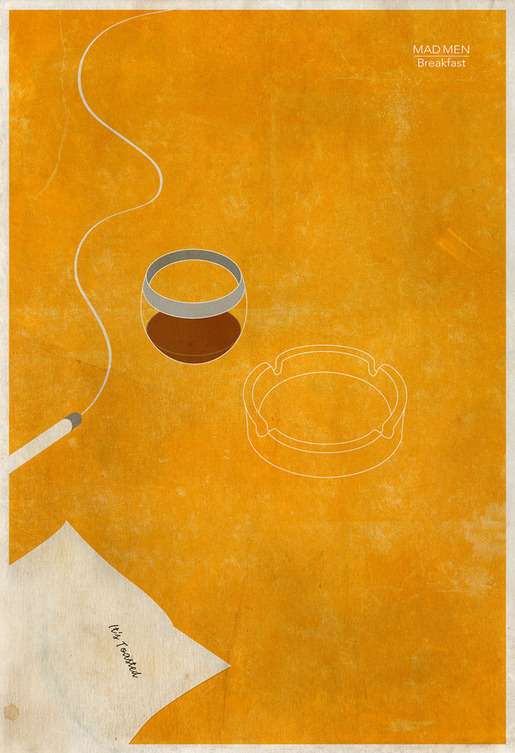
This awesome pair is by Ben Whitesell you can find his behance folio here
This is the final part of ‘minimalist remakes of film and television posters’ series, you can view the previous parts here..
Part 1
Part 2
Part 3
This awesome pair is by Ben Whitesell you can find his behance folio here
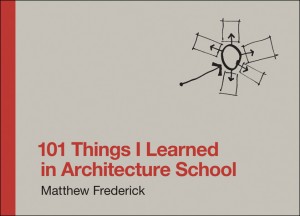
I would like to share with you a review of my newest, favourite-est architecture book —
101 Things I Learned in Architecture School
Frederick is an architect and urban designer from Massachusetts, and has taught at a number of colleges and universities, 101 Things is a collection of design ideas, philosophies and tips that he has put together to aid students in making sense of design and architecture as a whole.
The author’s note begins as follows..
“The architecture curriculum is a perplexing and unruly best, involving long hours, dense texts, and frequently obtuse instruction. If the lessons of architecture are fascinating (and the are), they are also fraught with so many exceptions and caveats the students can easily wonder if there is anything concrete (pun intended?) to lean about architecture at all.”
Frederick concludes, “This book aims to firm up the foundation of the architecture studio by providing rallying points upon which the design process may thrive.”
Frederick’s book was recommended to me by one of my tutors; it provides for students (and established professionals as he pointed out) the building blocks for architecture studio, providing students with fundamentals such as ‘how to draw a line’ to more complex theories of space, composition and design thinking.
The best thing about 101 Things I learned in architecture is the format; the pages are numbered, 1 to 101, and each providing a quick studio lesson, tip, quote, or just something to ponder, each accompanied by an explanatory drawing.
Not only does the book provide great tips and primer to studio, it also serves as a technical and intellectual guide that can be visited again and again during the design process. Often shedding a little more light on the vast world of architectural philosophy each time. Reminders to design in section, or a handy guide on architectural lettering. Every page in this little gem provides a little bit of knowledge certainly worth retaining.
I’d would also think that the 101 things is not to be limited to just architects, but would be of use to anyone design oriented.
Here’s a sample..
1. ‘How to draw a line’
8. ‘Architecture is the thoughtful making of space.’ (Louis Kahn)
12. Design an architectural space to accommodate a specific program, experience, or intent.
17. ‘The more specific a design idea is, the greater its appeal is likely to be.’
18. Any design decision should be justified in at least two ways.’
22. ‘How to make architectural hand-lettering.’
34. ‘Frame a view, don’t merely exhibit it.’
50. ‘Windows look dark in the daytime.’
59. ‘Traditional buildings have thick exterior walls. Modern buildings have thin walls.’
72. ‘Design with models!’
96. ‘Summer people are 22 inches wide. Winter people are 24 inches wide.’
100. ‘Give it a name’
101. Architects are late bloomers.’
‘101 Things de-mythologizes the jargon that obscures the real meanings of what is taught in design schools. Anyone interested in design will learn much for this terrific book.’
– President of Boston Architectural College, Theodore C. Landsmark.
Even the size, the chip board cover and price (less than 10 US on amazon from memory!) are appealing, and leaves you no excuse!

As a design blogger and student of architecture/design I am on the constant search for new and innovative products, designs and also the people behind them!
I should have done this a while ago, but today I finally went out of my way to create my blogroll and links page and I thought it would be worth while sharing it with you!
Before I begin, If you don’t already use a reader, I’m personally using google reader which is pretty solid.
Why would I want to use Google Reader?
The amount of information on the web is rapidly increasing. Google Reader helps you keep up with it all by organizing and managing all the content you’re interested in. Instead of continuously checking your favorite sites for updates, you can let Google Reader do it for you. From news sites to your friends’ blogs, Google Reader helps you keep up-to-date with all the online information that matters most to you.
All you need is a google account, and away you go…!
… I have developed my own little DesignTavern built Directory – It is comprised of a list of blogs and sites that I regularly visit! and certainly think are worth while checking!
Keeping up to date with the latest news is important and it’s amazing what you pick up even if you scan through a few articles every day – these are the blogs and sites that inspire my design thinking..
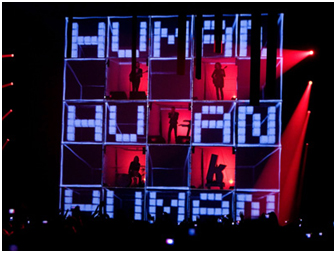
Barthes once wrote of the Death of the Author – the declining importance of an artist’s involvement in constructing the meaning of an artwork. In terms of modern art alone, this ‘death’ has allowed for new degrees of viewer and audience participation. Some of the best examples today, I think, are concerts and large scale performances. Thanks to countless advances in modern technology, including video screens and lighting, arenas and venues are able to be transformed into living, breathing artworks in themselves, their aim precisely to involve the audience and the viewer in ways never before thought possible.

“I see a world in the future in which we understand that all life is related to us and we treat that life with great humility and respect. I see us as well as social creatures, and when I began to look back and say, ‘what is the fundamental bottom line for us as social creatures?’…I couldn’t believe it because it seemed so hippy dippy, but it was Love. Love is the force that makes us fully human.”
– David Suzuki.