Love type?

6-o

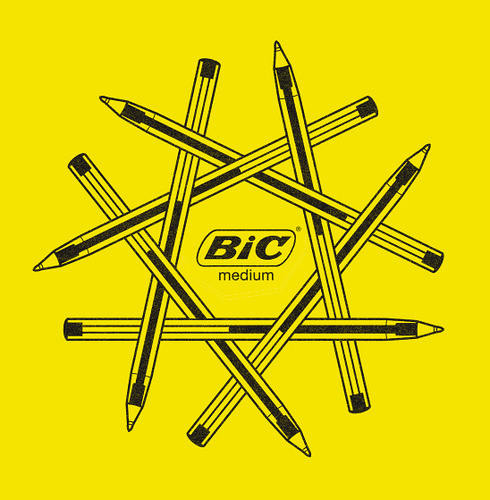
welovetypography.com is an awesome resource for typographic images and inspiration. New stuff is posted all the time, and you can search by colour, (as I did with yellow) as below. Rad.

Welovetypography is featuring a couple of Rosalie Gascoigne‘s works – anyone lucky enough to catch her exhibition earlier this year at Ian Potter at NGV (Melbourne) knows she is one talented lady.

If you are suffering from a bout of typeface-selection-block (note to self: think of more appropriate catch-phrase) then welovetypography should cure what ails ye.

Printed Matter – Evelin Kasikov

frontpage

Evelin Kasikov is an Estonian-born, London-based designer who explores the boundary between craft and print by incorporating stitches into print works.


Having studied traditional printmaking techniques (intaglio, letterpress and lithography), Kasikov now works predominantly in editorial and book design (notably, for the ever-impressive Phaidon list).

Kasikov describes her latest project, Printed Matter, as ‘an investigation into the relationship between tactile and visual perception, seeing and touching.’

Duotone

Monotone

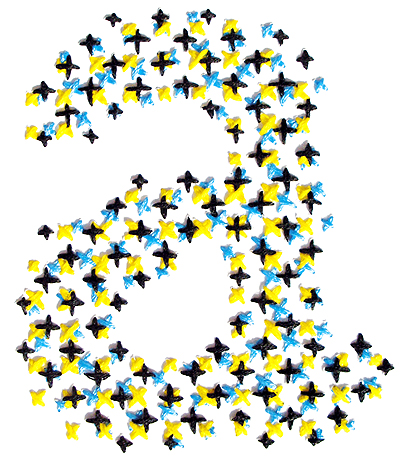
Printed Matter consists of ‘hand embroidery based on the analysis of optical mixture and colour printing processes.’ I love how the individual stitches represent CMYK, adding a tactile third dimension to print work.

Printed Matter

Printed Matter comprises four thematic books: Process, Element, Type and Image, which fit together to form a cohesive whole.

Process

Element

Type

Type

Image

Image

The trend of incorporating a handmade, crafted element into graphics is still going strong, but Kasikov’s work has a quiet, mature intricacy that transcends contemporary fashions.

Printed Matter

Tauba Auerbach

constraction-install

Words fail me when trying to describe the amazing work of mixed-media artist Tauba Auerbach. I came across Auerbach’s work recently at the San Francisco Museum of Modern Art, where she exhibited works as a 2008 recipient of the SECA (Society for the Encouragement of Contemporary Art) Awards.

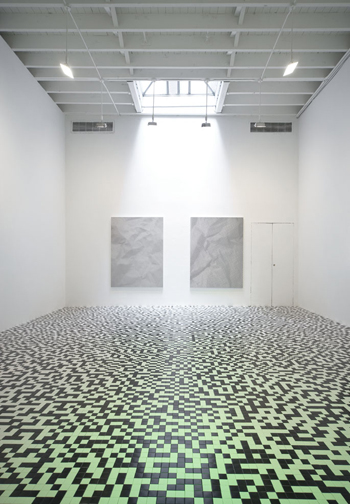
The SECA Awards program summarises Auerbach’s work by stating that ‘Auerbach investigates the logic of representational systems in series of drawings, prints, painting and mixed-media works that isolate symbols drawn from a range of communicative forms, including the Latin alphabet, Morse code, and even the patterns of television static.’

Auerbach explores the visual by-products of digital and analogue broadcasting in her work.

She often uses typographic or numerical symbols, words and figures to create meaning, such as the anagrams below.

The intent behind Auerbach’s work is quite fascinating – that is, to almost repurpose existing symbols of communication. In an interview published in the 2008 SECA catalogue, Auerbach says: ‘Initially, I valued being a kind of Luddite and doing everything by hand. Craft is dying and this is really upsetting to me. I blamed technology, but I’ve changed my mind about that now… these things are not mutually exclusive… In looking at the material of what is behind anything digitized — ones and zeros, or a signal and then the absence of a signal — I’ve come to feel that the system is prohibitively absolute. It’s a simple idea of something being there or not being there, and that’s what continues to fascinate me.’

Do check out taubaauerbach.com for more of Tauba’s beautiful work (and some very cool web design to boot).

Letterbox

pro_blt_comnumb01

Melbourne graphic design studio Letterbox, under the direction of type king Stephen Banham, is reknowned for its incredibly strong typographic focus.


         Established in 1991, Letterbox undertakes typographic projects. Some of these are commissioned by clients (identity systems, signage systems, external publishing and font customisation) whilst others are initiated by the studio (such as lectures, publications, forums and exhibitions).”

Like many contemporary design studios, Letterbox folk have their sticky little fingers in many pies – including visual identities, book publishing, web design and so on – but in all of their projects type takes a strong focus, as seen in the new identity for the Melbourne Recital Centre. 


Some examples of Letterbox’s excellent work include this book jacket for one my favourite Australian novels in recent years – I love how the type chosen beautifully and subtly reflects the agricultural nature of the novel.


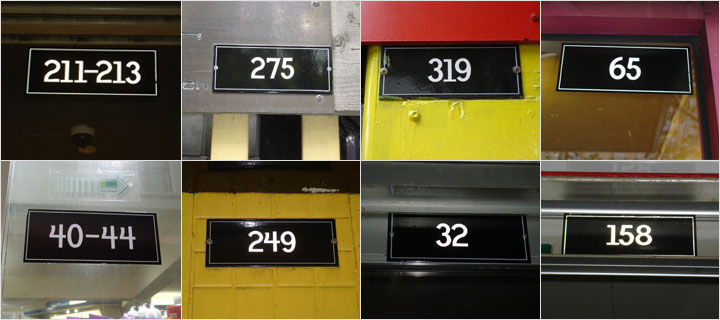
The Letterbox website also features typo-tours of Melbourne neighbourhoods – Melbourne, North Melbourne and Richmond. If you feel like strolling around North Melbourne on a sunny day and taking in some gorgeous typography, I strongly recommend following this tour, and be sure to stop by Auction Rooms for a coffee and check out their signage above the shopfront. 

I’d also stop by the Town Hall (the civic building, not the pub – although I’d happily stop in there too, let’s be honest) to see one of Letterbox’s projects, the Artshouse signage.


Letterbox also design their own fonts and these are for sale on their website – Greqsue and Berber are on my wishlist.


Letterbox is a truly amazing Melbourne studio with a body of work that manages to be incredibly diverse and yet employ a unified vision. Love, love, love their work! 
Tiny Texas Houses

tinytexashouses102206-017

Much has been written about McMansions and their generally detrimental effects upon the residential landscape, aestheticism, and most importantly the environment. With this in mind, it was most refreshing to stumble across Brad Kittel’s work at Tiny Texas Houses.


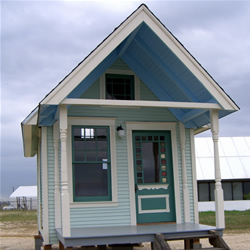
Kittel designs and build tiny houses – the largest so far being about 4 x 9 metres – through ‘Salvage Building’. Owners can choose from an enormous supply of salvaged doors, beams, and other fittings, to create a perfect tiny dwelling. They are then trucked from Texas to the owner’s property.


Often the tiny houses go over several storeys and incorporate lofts, higher levels and porches. While they are seriously tiny (although no worse than many student apartments in Melbourne!) they look gloriously cosy and seem to have everything you’d need.


There’s an interesting article in the New York Times about the trend away from larger-than-life living. 

Genius with Stanley Knife – Lizzie Thomas

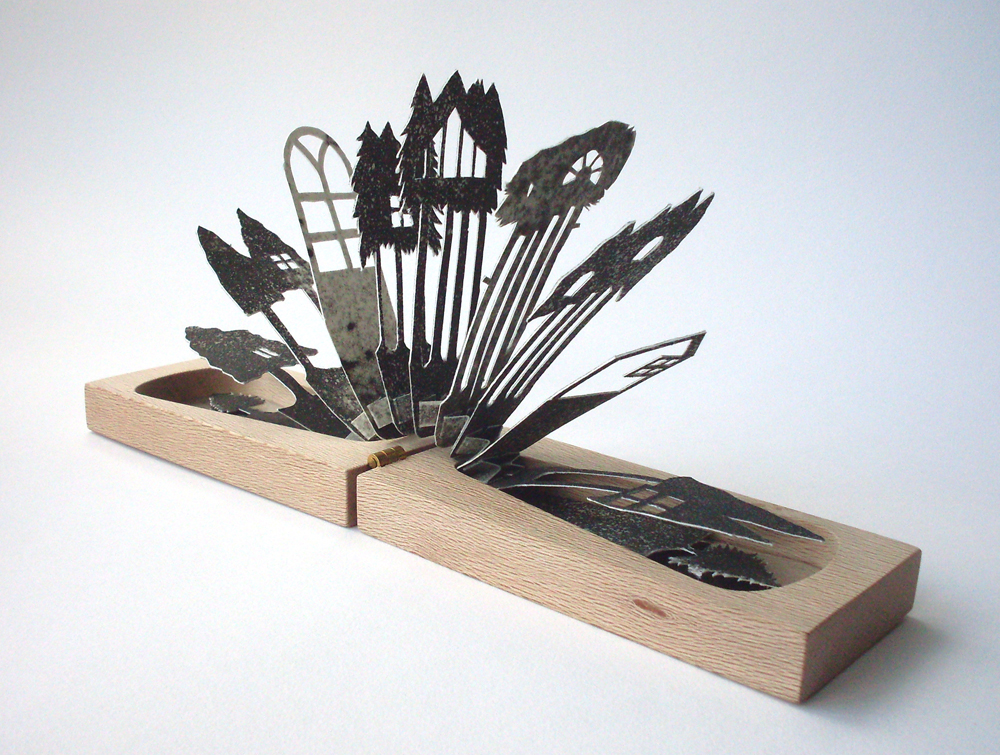
hidden-etching-smaller-file1

Lizzie Thomas is a UK-based self-described ‘artist & maker’ and an incredibly talented papercraftsperson and woodcutter.

She works in largely in 3D…


… and does some pretty amazing installation work. 


I love the suggestion of the merging of indoor and outdoor space in this piece.

This life-sized greeting card looks to me like the love-child of Tord Boontje and Beci Orpin


Lizzie takes on commissions and her work is also available for prop hire. Check out her website for more info.

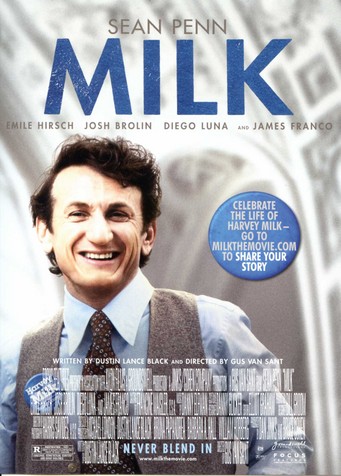
70s typography featured in ‘Milk’

Milk poster

There is nothing much better than seeing a great film in a beautiful cinema. I had this experience yesterday seeing Milk at the Westgarth. It was pretty awesome.

One of the best things about the film (apart from its inspirational storyline, fabulous performances etc) was the amazingly cool 70s typography that had been painstakingly recreated.

Most of the tyepfaces used in Milk’s promotional campaigns were blocky, sans-serif fonts – with the occasional serif thrown in for diversity.

Details »

Christopher Niemann: I Lego NY

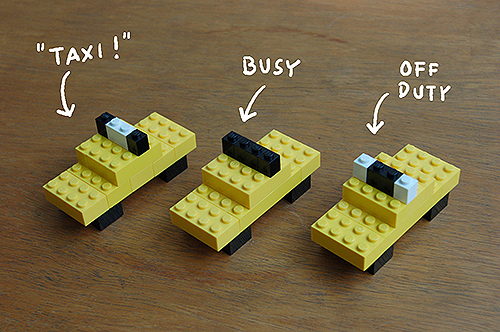
13taxi3

Further to last month’s post on the Lego wall, I love how these little Lego pieces remind me of how iconic objects can be recognised merely by their colour and shape, despite their simple form. How cute are these?


After moving to Berlin after a lengthy stretch of living in NY, author/illustrator Christopher Niemann was struck by how his sons’ Lego pieces started to remind him of things he missed.


Christopher blogs for the New York Times and has written two children’s books, in addition to illustrating for a whole bunch of noteworthy publications including these covers for the New Yorker.


Check out his blog here and website here – both are well worth a look-see.